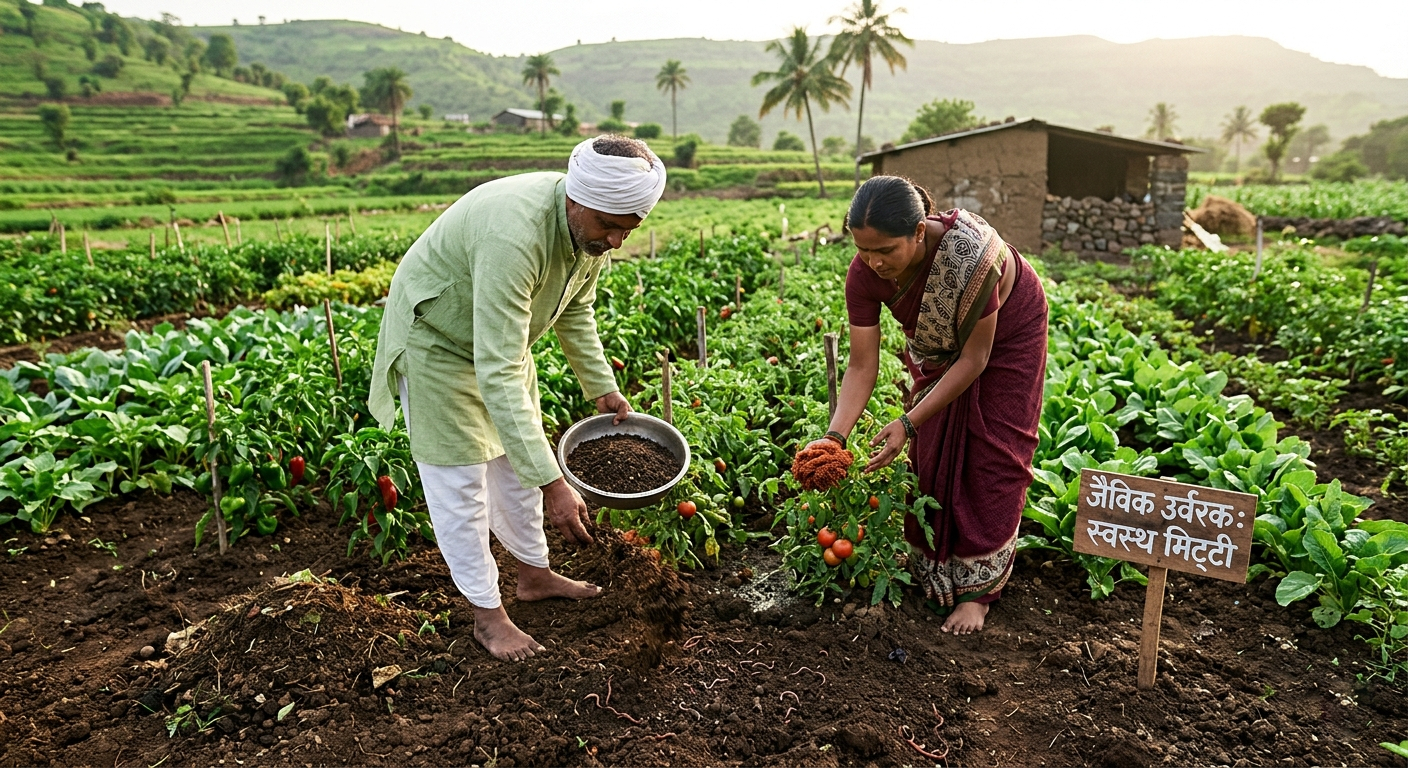
The Foundation of Farming: Healthy Soil
For decades, the focus of agriculture has been on high yields through chemical inputs. While successful in the short term, this has often come at the cost of soil vitality. Today, we understand that soil is a living ecosystem that needs to be nurtured.
The Chemical Dependency Cycle
Repeated use of synthetic fertilizers can lead to soil acidification and a decline in beneficial microbial activity. Over time, you need more chemicals to achieve the same yields—a cycle that is neither cost-effective nor sustainable.
Benefits of Organic Matter
- Better Water Retention: Organic soil acts like a sponge, holding moisture for longer periods.
- Microbial Diversity: Beneficial bacteria and fungi help plants absorb nutrients more efficiently.
- Natural Aeration: Improved soil structure allows roots to grow deeper and stronger.
"Healthy soil is the greatest asset a farmer owns. If we treat it like a bank account, we must ensure we make deposits (organic matter) as often as we make withdrawals (harvests)."
Making the Switch
You don't have to go 100% organic overnight. Start by incorporating vermicompost, cow dung, or green manure into your existing routine. Many farmers at ABC Mahudha have seen a significant reduction in input costs after the third year of organic integration.